Collections
Building a Wellington Boot Collection for a Family
A family's boot pile tells a story. Two pairs bought in a hurry before a wet weekend, one orphan with a split heel, a mystery size that fits nobody, and a single boot that everyone insists isn't theirs. The fix isn't more boots. It's a small, deliberate lineup that covers the ways your family actually uses them — school runs, dog walks, garden jobs, camping, puddles — plus a storage routine that stops rubber perishing in a hot porch. Build it once, then top it up as feet grow.
Start With Measurements, Not Shopping
Sizes printed on wellington boxes are a rough guide at best. Rubber doesn't flex like leather, brands cut their lasts differently, and a boot that fits in one label can pinch in another. Before you buy anything, measure every pair of feet in the house.
Stand each person against a wall on a sheet of paper, heel to the skirting, mark the longest toe, and measure heel to mark in centimetres. Do it late in the day, when feet are at their largest. Add roughly 10 to 15mm for a growing child, and enough room for the socks that boot will actually be worn with — thick wool in winter, thin cotton in summer.
Two more numbers matter for tall boots: calf circumference at the widest point, and the height you want the boot to finish. A tall boot that grips the calf is miserable on a long walk, and a wide one that stops mid-calf will rub. Keep the measurements in a note on your phone, with the date. It will save you years of guessing.
The Core Lineup for a Family of Four
Starting from nothing, this is a sensible target. Adjust the quantities, not the categories.
- Everyday tall wellies — one pair each, in a colour they'll actually wear. This is the pair that leaves the house most days.
- Short or ankle boots — for summer, camping, paddling and festivals. Lighter and cooler, and far easier for small children to pull on themselves.
- An insulated winter pair — neoprene-lined, or roomy enough for thick socks, for the adults and the child who feels the cold first. One or two pairs per household is usually plenty.
- A work pair — for the garden, the allotment or serious mud. Deep tread, good grip, and nobody minds if they get scratched.
- A car spare — one older but still watertight pair kept in the boot, in a size that fits the most likely wearer.
That's five categories across four people, not twenty pairs of boots. Most families manage with fewer than they own.
Colour and Marking: the Practical Rules
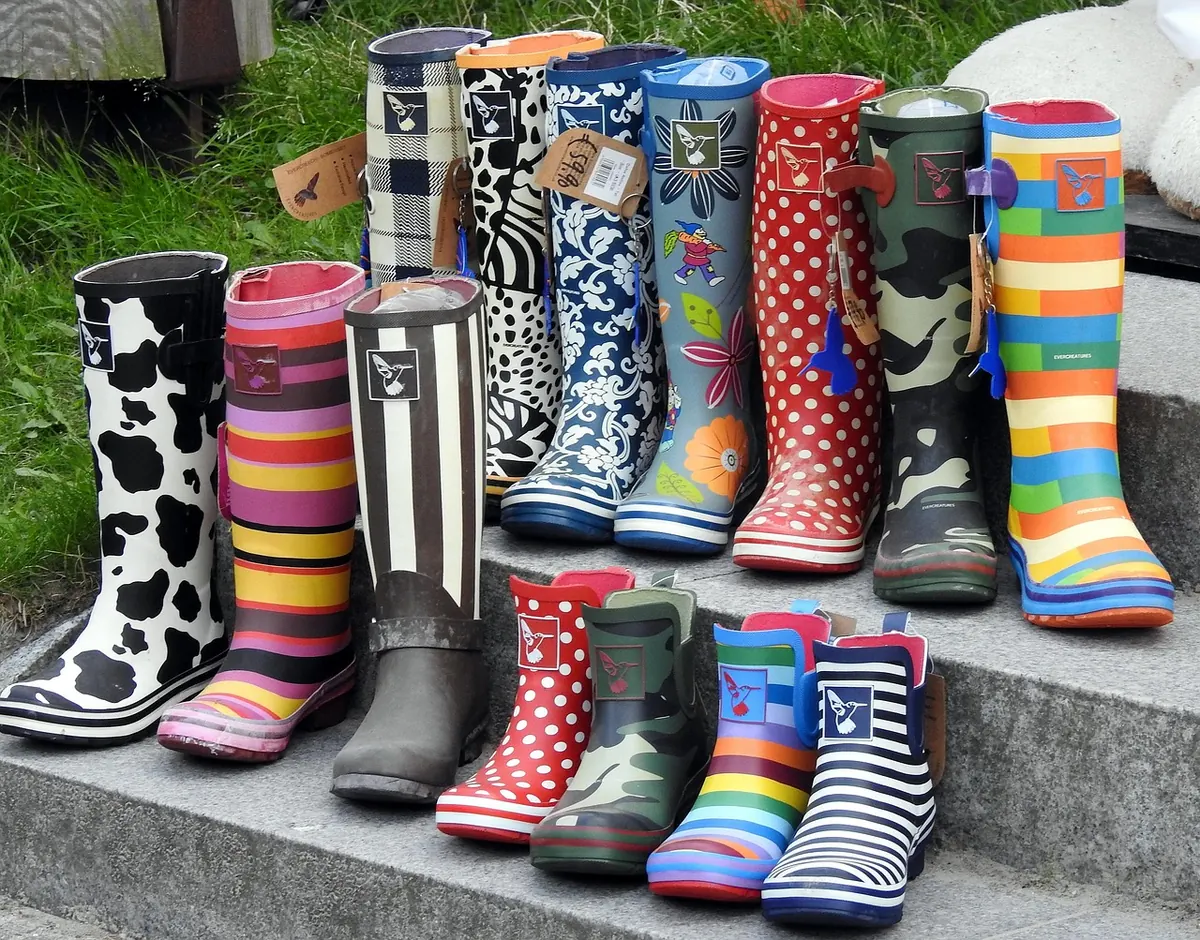
Nothing disappears faster than a navy welly in a pile of navy wellies. Give each child a colour they can identify from across a playground, then write their name in permanent marker inside the shaft as well as on the outside of the heel. If the boots have a fabric loop or tag, run a name label through it.
Adults are better served by one dark, neutral colour each — dark green, charcoal, black, claret — that works with whatever coat they grab. A bright ribbon or a cable tie on the handle is easier to spot in a crowded boot room than a whole new colour scheme, and cheaper than replacing a boot nobody can find.
If anyone walks on unlit lanes in winter, hi-visibility boots or reflective strips are worth the extra search. It's a small detail that makes a real difference to being seen.
Buying Ahead Without Buying Wrong
Growing room is a trap. One size up is sensible; two sizes up means a child's heel lifts on every step, socks ruffle down, and the boots get abandoned by the back door. If a pair is enormous, wait and buy the right size later rather than forcing it.
Hand-me-downs are fine with two checks. Press the sole at the flex point and look for cracks, then run a thumb around the seam where rubber meets sole — if water can get in there, the boot is finished. Worn tread matters less, unless the boot is used for slippery work or long walks.
Spend where the hours are. The everyday tall pair and the work pair earn their cost; the boots worn twice a year at a festival don't need to be premium. And don't buy three pairs for a toddler whose feet change every few months. One good tall pair and one inexpensive short pair will see them through.
A Boot Station That Works
Rubber is durable but not indestructible. Heat, direct sunlight and being crushed under a pile of shoes are the three things that shorten a boot's life. A boot station by the door solves that and the daily hunt at the same time.
- An open rack or shelf where each person has a slot, boots standing upright or hanging by the loop.
- A tray or shallow gravel-lined box underneath to catch grit and drips.
- Space between pairs — air movement is what dries rubber.
- Away from radiators, wood burners and south-facing windows.
Drying
Rinse mud off with cold water the same day, especially where it collects around the sole. Leave boots to drain upside down or with the tops open, and stuff crumpled newspaper inside overnight if they're soaked through. Change the paper once it's damp. A low-temperature boot dryer earns its place in a wet climate; a hot radiator is the opposite of help, because it hardens and cracks the rubber.
Long-term storage
Wash, dry fully, then store upright somewhere cool and out of the sun. Not folded, not weighted down by other boots, and not sealed inside a plastic bag, which traps moisture and encourages mould. A shelf in a shed or garage is fine. A hot loft is not.
The Twice-a-Year Five-Minute Audit
Once before the wet season and once in spring, run through the whole pile. It takes minutes and prevents the morning where nobody can find two boots that fit.
- Empty every boot and shake out grit, stones and the occasional toy.
- Check for leaks: hold each boot under a running tap, or fill it with water in the sink and watch the outside for damp patches.
- Measure each child's foot with the paper method and compare it with the size chart in centimetres.
- Wash with cool water and a soft brush, dry fully, and put everything back in its slot.
- Reassign: pass down pairs that still fit someone, and retire anything cracked or outgrown.
Two boots that match, in the right size, dry and waiting by the door — that's the whole point of a collection. Everything else is decoration.
Photo: Alexas Fotos / Pexels