Buying Guides
Beginner's Guide to Wellington Boots for Gardening
A wet February morning on an allotment tells you everything about footwear. Ten paces in, you've crossed muddy grass, a paved path slick with algae, and a bed of heavy clay that grabs at your soles. Trainers soak through. Walking boots are fine until the mud dries into a crust you can't shift. What you want is a pair of wellies you can hose down at the end of the morning and forget about.
Four things decide whether a pair of wellington boots will suit a garden or allotment: tread, height, comfort and how easily they clean. Get those right and you'll stop thinking about your feet. Get them wrong and you'll be buying again by autumn.
Why gardening wellies are a category of their own
Wellies made for festivals, stables or a weekend in the country won't necessarily suit a plot. Gardener's boots spend their lives standing on uneven ground, kneeling in dirt and getting filthy. You need grip rather than good looks, a shaft that doesn't dig into your calf when you crouch, and a surface that gives up mud under a hosepipe. You also don't need expedition-grade kit — most growers walk less than a mile in theirs. A mid-weight rubber boot with a decent footbed beats a heavy technical one you dread pulling on.
Tread: grip where it counts
Sole patterns matter more than the marketing suggests. The two places you're most likely to slip are wet decking and a path covered in algae or wet grass — both common on plots. Look for medium-depth, wide-spaced lugs with a defined heel. Wide spacing lets mud fall out as you walk, so the tread keeps biting instead of turning into a slick tyre.
What to look for on the sole
- Self-cleaning lugs. Gaps wide enough that clay and leaf litter don't pack solid.
- Defined edges. Sharp lugs cut through a film of wet grass better than soft, rounded blobs.
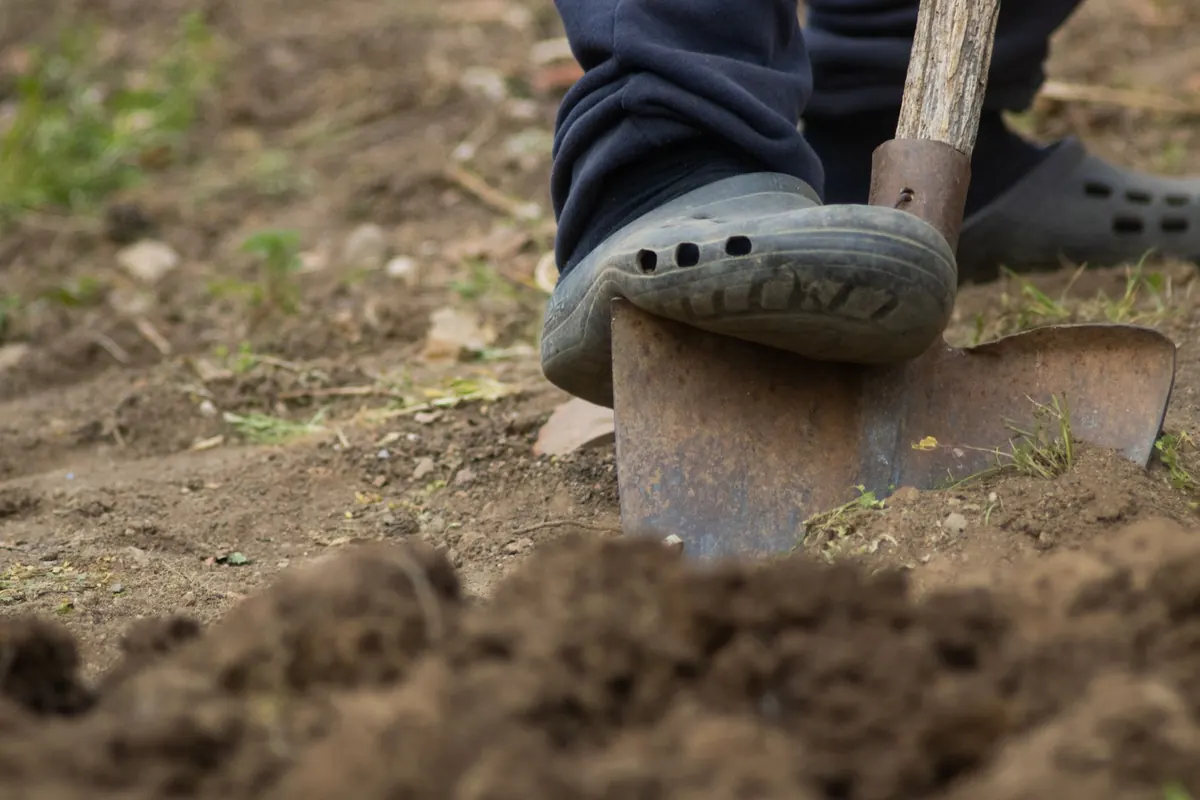
- A real heel block. Useful when you press a spade in with your foot.
- Some shallow ribbing. Aggressive cleats skate on wet flagstones; a mixed pattern copes with both.
- Sensible weight. A thick sole adds stability, but you'll feel every gram by the third hour.
Think about your route before you buy. If the path from the gate to your bed is paved, deep cleats that feel marvellous in a bog can feel treacherous on concrete, especially once they've worn smooth.
Height: ankle, knee or thigh
Ankle and short boots are quick to pull on for a twenty-minute job — picking beans, filling the bird feeder — and breathe better in warm weather. They're no good in standing water or long wet grass.
Knee-height and mid-calf boots are the sensible default. They keep wet foliage off your trousers, protect against nettles, and stay put when you dig. A shaft finishing just below the knee suits most people best.
Thigh-height boots earn their place only on a flooded plot. They're hot, slow to put on and awkward to kneel in — and kneeling is what gardening is mostly made of.
Whichever you choose, check the top of the shaft. Too narrow and it rubs; too wide and rain and soil drop straight in. If you tuck trousers in, leave room for the fabric.
Comfort for a long morning
Wellies are unforgiving of a poor fit because there are no laces to adjust. Aim for a snug heel with a thumb's width at the toe, so your foot doesn't slide forward when you squat or walk downhill. A boot that feels slightly loose in the shop will feel like a flipper after two hours.
Three details do most of the work:
- A removable insole. Swap the flimsy one supplied for an arch-supporting insole if your feet ache. It also speeds drying.
- Socks that wick. Wool or bamboo beats thin cotton, even in summer. Cotton holds sweat against the skin, and cold damp feet make a short job feel long.
- An adjustable top. A gusset and strap lets you cinch the boot on a slim leg or loosen it over trousers.
If your feet run cold in winter, consider insulated or neoprene-lined boots. They're warmer but less breathable, so keep them for the cold months. If you get persistent foot pain, numbness or circulation trouble, it's worth speaking to a podiatrist or your GP before spending a lot on boots.
Hose-clean features and getting them off
The best gardening wellies take thirty seconds to clean. Smooth matte rubber rinses clean with a hose; heavily textured or fabric-look finishes hold mud and need scrubbing. Inside, a quick-drying lining beats thick fleece on all but the coldest days.
Look for a heel kick-off lug — a raised ridge at the back that lets you step out of the boot with the other foot. It sounds trivial until the first time you're standing in the rain with muddy hands. A boot jack by the
Photo: Riccardo Falconi / Pexels